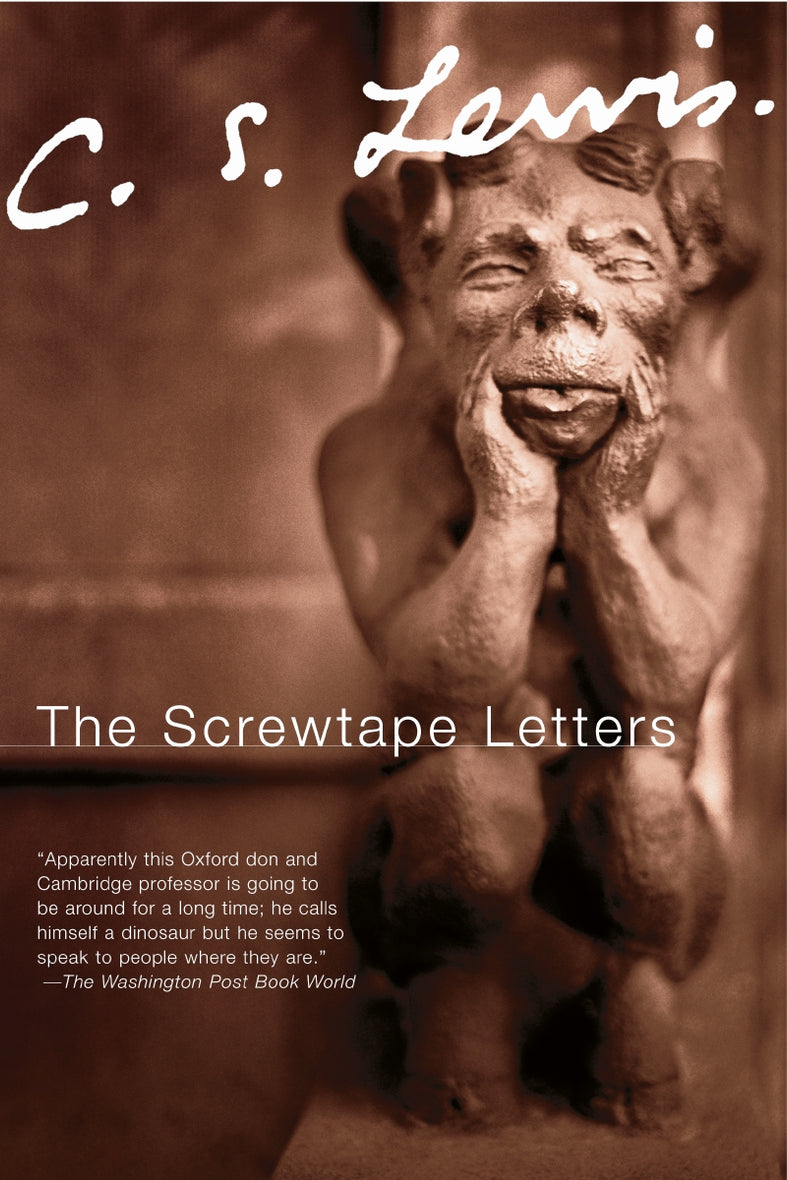
I read this passage from our book of devotionals two days ago. It is a book with passages of C. S. Lewis’s books. The book The Screwtape letters is about a demon boss writes to his student. The letter is the demon boss teaching his student what to do to take the new Christian off the right path. What kind of temptations and thoughts should be offered to his patient (as he is called). I liked this book because we can see how easy target we can become when we are not taking seriously the Word of God. How the thoughts and temptations appear to us and why. How we should behave with our superiors or even our parents. In this environment the student facilitate some fights for silly things, which is reality most of out fights and arguments with parents and people in general are all about, silly things. Anyway, it you have the opportunity to read this book, do not let it pass. Take it. Finding Balance Screwtape offers ways to cleverly exploit the Patient’s dry spell: But there is an even better way of exploiting the trough; I mean through the patient’s own thoughts about it. As always, the first step is to keep knowledge out of his mind. Do not let him suspect the law of undulation. Let him assume that the first ardours of his conversion might have been expected to last, and ought to have lasted, forever, and that his present dryness is an equally permanent condition. Having once got this misconception well fixed in his head, you may then proceed in various ways. It all depends on whether your man is of the desponding type who can be tempted to despair, or of the wishful-thinking type who can be assured that all is well. The former type is getting rare among humans. If your patient should happen to belong to it, everything is easy. You have only got to keep him out of the way of experienced Christians (an easy task nowdays), to direct his attention to the appropriate passages in scripture, and then to set him to work on the desperate design of recovering his old feelings by sheer will-power, and the game is ours. If he is of the more hopeful type your job is to make his acquiesce in the present low temperature of his spirit and gradually become content with it, persuading himself that it is not so low after all. In a week or two you will be making him doubt whether the first days of his Christianity were not, perhaps, a little excessive. Talk to him about ‘moderation in all things’. If you can once get him to the point of thinking that ‘religion is all very well up to a point’ you can feel happy about his soul. A moderate religion is as good for us as no religion at all – and more amusing. From The Screwtape letters C.S. Lewis. | Li esta passagem do nosso livro de devocionais há dois dias. É um livro com passagens dos livros de C. S. Lewis. O livro Cartas de um diabo ao seu aprendiz é sobre um chefe demônio que escreve para seu aluno. A carta é o chefe demônio ensinando seu aluno o que fazer para tirar o novo cristão do caminho certo. Que tipo de tentações e pensamentos devem ser oferecidos ao seu paciente (como ele é chamado). Gostei deste livro porque podemos ver o quão fácil podemos nos tornar alvos quando não levamos a sério a Palavra de Deus. Como os pensamentos e tentações nos aparecem e por quê. Como devemos nos comportar com nossos superiores ou mesmo com nossos pais. Neste ambiente, o aluno facilita algumas brigas por coisas bobas, o que é a realidade, a maioria de nossas brigas e discussões com pais e pessoas em geral são sobre coisas bobas. De qualquer forma, se você tiver a oportunidade de ler este livro, não a deixe passar. Aproveite.
Encontrando o equilíbrio
Screwtape oferece maneiras de explorar habilmente o período de seca do paciente: Mas há uma maneira ainda melhor de explorar o vale; Quero dizer, através dos próprios pensamentos do paciente sobre isso. Como sempre, o primeiro passo é manter o conhecimento fora de sua mente. Não o deixe suspeitar da lei da ondulação. Deixe-o assumir que os primeiros ardores de sua conversão poderiam ter durado, e deveriam ter durado, para sempre, e que sua secura atual é uma condição igualmente permanente. Tendo uma vez fixado bem esse equívoco em sua cabeça, você pode então prosseguir de várias maneiras. Tudo depende se seu homem é do tipo desanimado que pode ser tentado ao desespero, ou do tipo que pensa positivo e pode ter certeza de que tudo está bem. O primeiro tipo está se tornando raro entre os humanos. Se seu paciente pertencer a ele, tudo é fácil. Você só precisa mantê-lo fora do caminho de cristãos experientes (uma tarefa fácil hoje em dia), direcionar sua atenção para as passagens apropriadas nas escrituras e, então, colocá-lo para trabalhar no projeto desesperado de recuperar seus antigos sentimentos por pura força de vontade, e o jogo é nosso. Se ele for do tipo mais esperançoso, seu trabalho é fazê-lo concordar com a temperatura baixa atual de seu espírito e gradualmente se contentar com ela, persuadindo-se de que ela não é tão baixa assim. Em uma ou duas semanas, você o fará duvidar se os primeiros dias de seu cristianismo não foram, talvez, um pouco excessivos. Fale com ele sobre "moderação em todas as coisas". Se você puder levá-lo ao ponto de pensar que "a religião é muito boa até certo ponto", você pode se sentir feliz com sua alma. Uma religião moderada é tão boa para nós quanto nenhuma religião - e mais divertida. De The Screwtape letters C.S. Lewis. |
Comments
Post a Comment